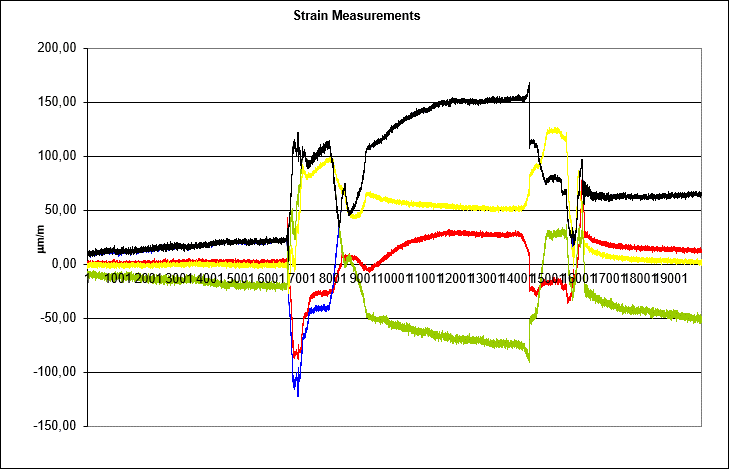

Strain Gauge Measurements
Precitronic ensures PCB structural integrity through high-precision Strain Gauge Measurement. By quantifying material deformation with multi-axis sensors, we detect micro-stresses as small as 1 µm/m, guaranteeing that your boards and fixtures meet the highest reliability standards.
Ensuring PCBA Structural Integrity
In PCB manufacturing, achieving perfectly assembled and functional boards isn't just a goal—it’s a necessity. To support this, Precitronic provides expert Strain Gauge Measurement services for both our in-house fixtures and externally delivered equipment.
How It Works
A strain gauge is a precision sensor that converts physical forces—like axial, bending, or torsional stress—into measurable electrical signals. By bonding these sensors to a PCBA at specific areas, we can quantify material deformation (strain) with incredible accuracy.
As the board or fixture undergoes stress, the gage deforms, altering its electrical resistance. We then use X, Y, and Z-axis measuring stamps (load cells) to capture this data, ensuring your assembly can withstand real-world conditions.
Key Technical Insights
To ensure the highest level of reliability, our process focuses on several critical factors:
- Precision Measurement: Strain expresses the ratio of elongation to original length. We can detect changes as minute as 1 µm/m (e.g., a 0.001 mm change in a 1-meter bar).
- Gauge Factor (GF): This represents the sensitivity of our sensors, tracking the specific ratio of resistance change to length change.
- Wheatstone Bridge Configuration: Because these resistance changes are incredibly small, we use Wheatstone bridge circuits to convert minute fluctuations into accurate, readable voltage data.
Whether you are validating a new design or testing a production fixture, our measurement services provide the data-driven confidence that your boards are built to last. Reach out to Precitronic to request a quotation.